| Mammary Gland (Breast) Cancer in Dogs |
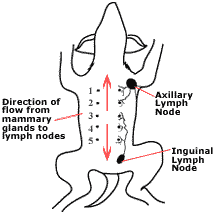
| What are mammary gland (breast) tumors? Mammary glands are female organs that produce milk for feeding the young. Dogs have 5 glands on each side which are drained by lymph nodes in the armpit and the groin. The development of cancer in the mammary glands has been shown to be dependent on hormones and mammary cancer is one of the most common cancers in the female dog. Based on available data, approximately 50% masses in the mammary glands are malignant. Source: www.peteducation.com/images/articles/mammary_glands.gif It is important to know that mammary cancer does not refer to a single disease but there are many different subtypes, each responding differently to treatment and each with a different prognosis. The subclassification of mammary cancer is as follows: Benign tumors Malignant tumors Adenoma Non-infiltrating carcinoma Simple adenoma Complex carcinoma Complex adenoma Simple carcinoma Basaloid adenoma Tubulopapillary carcinoma Fibroadenoma Solid carcinoma Low-cellularity fibroadenoma Anaplastic carcinoma High-cellularity fibroadenoma Special types of carcinomas Benign mixed tumor Spindle cell carcinoma Duct papilloma Squamous cell carcinoma Mucinous carcinoma Lipid-rich carcinoma How common are breast tumors in dogs? Spaying dogs prior to their first heat cycle significantly reduces the cancer risk later in life. Spaying after the second heat cycle does not provide any advantage. What are the symptoms of breast cancer in dogs? Mammary tumors can develop either as a single mass or as multiple masses within the mammary gland. Dogs and cats have multiple mammary glands, all of which can develop one or more benign or malignant tumors. Benign tumors are typically well defined and firm upon examination whereas the clinical symptoms of malignant tumors include rapid growth, ill- defined boundaries, ulceration and/or inflammation. Inflammatory carcinoma subclass of mammary tumors is typically rapidly growing, affects multiple mammary glands and is characterized by firmness, warmth, edema, erythema, thickening and signs of pain. Extensive swelling (lymphedema) of a limb adjacent to the affected glands can be also observed. How is the diagnosis made? The diagnostic procedures include physical examination, blood and serum chemistry profiles, X-rays, and abdominal ultrasound. Collecting cells with fine-needle aspiration for cytology evaluation is not a sensitive method to distinguish malignant from benign cells but can help rule out other lesions such as inflammatory lesions or mast cell tumors. The most definitive way to get a diagnosis on the pet's suspected mass is to obtain a tissue biopsy. Does cancer cause pain in dogs? Pain is common in pets with cancer, with some tumors causing more pain than others. In addition to pain caused by the actual tumors, pets will also experience pain associated with cancer treatments such as surgery, radiation therapy or chemotherapy. Untreated pain decreases the pet's quality of life, and prolongs recovery from the illness, treatment or injury. It is, therefore, essential that veterinary teams that are taking care of pets with cancer should also play a vital role in educating pet owners about recognizing and managing pain in their pets. The best way to manage cancer pain in pets is to prevent it, a term referred to as preemptive pain management. This strategy anticipates pain ahead of time and administers pain medication before the pet actually experiences pain, thus ensuring the pet's maximum comfort. To learn more about which tumors are likely to cause a lot of pain, how to recognize pain in pets with cancer and what cancer pain management options are available for your pet, please visit the Cancer Pain Management section. Is nutritional support important for dogs with cancer? Cancer cachexia (a term referring to progressive severe weight loss) is frequently observed in pets with cancer. Pets with cancer lose weight partly because of lack of appetite and partly because of cancer-induced altered metabolism. Some of the causes for decreased appetite are related to the cancer itself (for example, tumors may physically interfere with food chewing, swallowing, and digestion process) and some may be related to the side effects of cancer treatment (for example, some chemotherapy drugs cause nausea and vomiting, and radiation therapy can cause mouth inflammation). Proper nutrition while undergoing cancer treatment is essential to maintain your pet's strength, improve survival times, quality of life and maximize response to therapy. Adequate nutritional support was shown to decrease the duration of hospitalization, reduce post-surgery complications and enhance the healing process. Additionally, pets with cancer need to be fed diets specifically designed to provide maximum benefit and nutritional support for the patient. To learn more, please visit the Cancer Nutrition section. What are the treatment options for breast cancer in dogs? Surgery The primary goal of surgery is to remove the tumor and it remains as the treatment of choice with a few exceptions. There are a variety of different procedures that can be used to remove the breast tumors and the choice of procedure is determined by various factors of your pet's condition such as the size of the tumor, the number of lesions, etc. Lumpectomy (also called nodulectomy) is typically performed on small benign nodules. Mammectomy refers to the procedure that removes the affected mammary gland(s). Mastectomy refers to the procedure that removes all of the mammary glands at once. The mammary tumors can spread to the adjacent lymph nodes, however, it is not very common in dogs. The lymph nodes should be removed only if they are enlarged and cytologically positive for cancer or whenever gland 5 is removed due to the close association of the lymph node with this node. Chemotherapy While chemotherapy is the standard of care for humans, its benefit in canine mammary tumors has not been fully evaluated. Small studies support the benefit of chemotherapy but additional studies with larger number of patients need to be done for confirmation. Radiation therapy As is the case for chemotherapy, veterinary oncologists don't have enough information to confirm or rule out the benefit of radiation therapy in the case of mammary tumors. What are the treatment associated risks? The risks associated with the surgical removal of the mammary tumors include rare complications such as anesthetic death and infection. How do I find a qualified veterinary oncologist? To locate a qualified veterinary oncologist worldwide who can discuss with you appropriate cancer treatment plan for your pet's cancer condition, please visit the "Locate a veterinary oncologist" section. Are there any clinical trials investigating new treatments for breast cancer in dogs? There is one ongoing clinical trial in canine mammary cancer at Auburn University in Alabama (click here for more details). In addition, there are several clinical trials available for dogs with any tumor type for which your pet may qualify. To learn more these trials (which are partially or fully funded by the institutions), please visit the Dog Clinical Trials (any tumor type) or Cat Clinical Trials (any tumor type) section. To learn more about veterinary clinical trials in general, please visit the Pet Clinical Trials section. What is the prognosis for dogs with breast cancer? There are several factors that will influence the pet's prognosis including the type of the tumor, its size, lymph node involvement, presence of metastasis, etc. The following table summarizes the prognostic factors which should not be taken as absolute but rather relative: Source: Withrow Stephen J, and David M. Vail. Small Animal Clinical Oncology. St Louis: Saunders Elsevier, 2007. Additional Resources:
Sources:
|
|





| PET CANCER CENTER Comprehensive guide to cancer diagnosis and treatment in cats and dogs |
© 2007 Pet Cancer Center. ALL RIGHTS RESERVED.
Last updated 02/19/2017